Error code: %{errorCode}
Itauma-Whyte: Five times acid tests went wrong
Not just content with seeing present day greats, boxing fans are always getting excited about the next big thing.
Moses Itauma has so far lived up to the hype that surrounds him, the young British heavyweight 12 wins into a pro career that began in 2023.
But his clash with fellow Brit Dillian Whyte this month, live on DAZN, marks a massive step up in quality, his opponent a former world-title challenger not too far removed from his prime.
In anticipation of the biggest challenge of Itauma’s career to date, we have taken a look at previous acid tests that did not go to plan for past prospects.
David Price vs Tony Thompson, 2013
An Olympic bronze medallist, David Price was tipped to become a big presence in heavyweight boxing. ESPN named him 'Prospect of the Year' in 2012, showcasing that he was being recognised as a talent on both sides of the Atlantic.
Tony Thompson had pedigree of his own. He had just challenged the dominant Wladimir Klitschko for a second time, again losing out on the International Boxing Federation (IBF) and World Boxing Organisation (WBO) heavyweight world titles.
Ranked at number five by the IBF, Thompson was a contender but some distance off boxing’s elite, and as such, the American represented a good litmus test to see where Price was compared to proven, international boxers, having already won the English, British, and Commonwealth titles.
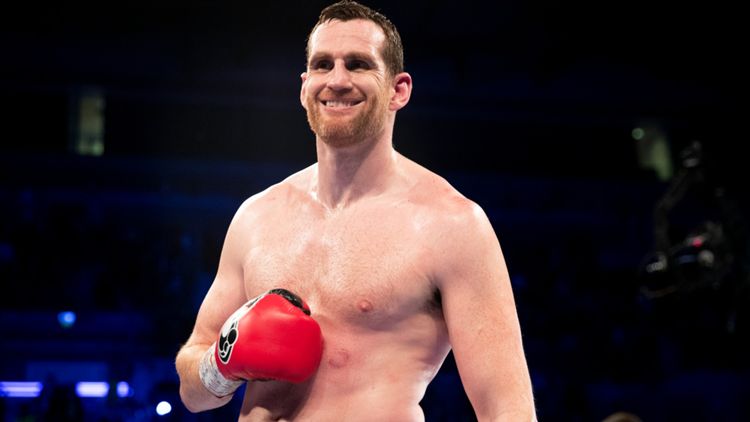
Price was already looking ahead to his next fight, a bout with Tyson Fury that been brewing due to a war of words between the British heavyweights.
Entering the fight, the Liverpudlian had strung together 15 wins, with 13 ending early. Fighting in his home city, Price was the favourite, and he quickly proved why as he controlled the first two rounds.
Just as he pushed to launch a barrage of blows for the first time, Price found himself counter-punched by Thompson, the veteran landing a blow behind the Scouser’s ear that sent him to the canvas.
Able to beat the count, Price was clearly disoriented, and the fight was waved off in the second. A rematch clause was activated, with Price clearly motivated to get revenge, the pair meeting once more at the Echo Arena in Liverpool, five months after their first bout.
This time Price had Thompson down in the second, but the American’s work to the body soon took its toll. Tiring in the fourth, Price appeared to give up in the fifth, turning his back to Thompson. Eventually the referee stepped in, awarding Thompson a technical knockout victory.
Price’s career never recovered, even after his attempts to find a new trainer. Thompson would attempt to take the momentum from the two victories into one last push for a world title, but five defeats in his last seven bouts saw his career end in a whimper.
David Haye vs Carl Thompson, 2004
Another David to have lost to an older, experienced fighter named Thompson was David Haye, who was defeated by fellow Brit Carl Thompson.
The similarities between Haye and Price end there, with the former going on to become a two-division world champion.
Arguably there was a difference in the level of opponent, with Thompson a former world champion at cruiserweight. In fact, the bout between Haye and Thompson was for a minor world championship, with the latter putting his IBO title on the line.
Thompson was five years removed from his stint as the WBO’s world champion, having given up the belt to Johnny Nelson following a fifth-round knockout in 1999.
 Richard Heathcote/Getty Images
Coincidentally, it would be a fifth-round stoppage that saw Thompson defeat Haye at the Wembley Arena. Already designated the future of cruiserweight boxing, many expected Haye, 17 years Thompson’s younger, to make quick work of the ex-champion. Haye was a perfect 10 from 10 to start his career; all of his victories coming by way of knockout.
‘The Hayemaker’ went on the offensive in the opening three rounds but found a resilient Thompson, who somehow survived some heavy blows despite clearly being buzzed by his fresh-faced opponent.
In the fourth, Haye began to tire, and by the fifth, Thompson had taken charge. A trip onto the canvas was not scored a knockdown, but Haye was quickly proving unable to defend himself.
The referee stepped in, meaning Thompson had inflicted upon Haye his first professional defeat.
Haye would bounce back, going on to become World Boxing Association (WBA), World Boxing Council (WBC), and WBO champion at 200lbs, before moving up and claiming the WBA belt at heavyweight.
Thompson would fight once more, winning his final bout before retiring in 2005.
- Read next | Ricky Hatton, Joe Calzaghe, Josh Taylor: Ranking Britain's best world champions of the 21st century
Audley Harrison vs Danny Williams, 2005
Audley Harrison was the biggest thing in British boxing at the start of the century, ‘A-force’ becoming a household name after becoming the first Brit to win an Olympic gold at super-heavyweight at the 2000 games in Sydney.
Ahead of turning professional in 2001, Harrison signed a £1m deal with BBC Sport. Clearly talented, Harrison made his self-confidence very well known, developing a reputation for being outspoken in the build-up to fights.
He had long called out Danny Williams, and after winning his first 19 fights, he was put into the ring with the former British heavyweight champion
Williams was a year removed from challenging Vitali Klitschko for the WBC heavyweight title, his prior fight a shock win over Mike Tyson.
Dominated by Klitschko, Williams still represented a marked step-up in quality compared to Harrison’s previous opponents.
15,000 tickets were easily sold for the clash at the ExCel Arena in London, but the bout itself was a letdown. Williams’ camp had called the British Boxing Board of Control to request that the referee crackdown on excessive holding and wrestling from Harrison, with their fears being proven correct.
Harrison was gun-shy and defensive, whilst Williams kept plugging away. When the fight did open up in the final rounds, both boxers were too drained to find a finishing blow. It went to the judges’ scorecards, who had Williams winning via split decision: 116-112, 116-113, 113-114.
The pair would meet again the following year, Harrison avenging his defeat with a knockout of Williams, but the former poster boy for British boxing never hit the heights many expected him to.
He would challenge once for a world title – losing to David Haye in a title fight for the WBA heavyweight strap. Coincidentally, he would also lose to David Price, just before the Merseysider failed an acid test of his own against Tony Thompson.
Tony Yoka vs Martin Bakole, 2022
Yet another Olympian, Tony Yoka won gold at the 2016 Rio Olympics at super-heavyweight. He had nine knockouts from 11 wins to start his career, and Martin Bakole was expected to be a stern, yet winnable encounter for the Frenchman.
But by the end of the first round, Yoka found out that he was in for a rude awakening. Knocked down at the end of the round, Yoka would be bleeding by the third, a cut above his eye and a broken nose for his troubles.
 Getty Images
Another knockdown in round five continued as Bakole showed no signs of slowing down. Yoka had moments, but could not find anything to truly trouble Bakole.
He made it to the bell, where the judges were more than kind to the hometown fighter. Bakole took a majority decision, with one judge somehow scoring the contest a draw, but any major controversy was avoided.
Yoka’s career stuttered after the loss, as it sparked a run of three defeats, narrowly beaten by Carlos Takam and Ryad Merhy via split decision in 2023.
Jared Anderson vs Martin Bakole 2024
Martin Bakole was earning a reputation as a heavy hitter long before defeating Tony Yoka, but his reputation as a boogeyman or gatekeeper in the heavyweight division was asserted with a victory over Jared Anderson.
Anderson was a two-time US National champion at heavyweight as an amateur, leading to Bob Arum’s Top Rank snapping him up to a multi-year deal at the start of his professional career.
He cruised to 17 wins to start his career, the first 13 all by stoppage, and entered the contest ranked by the WBO and WBC.
The favourite heading into the contest, Anderson was quickly on the backfoot when he found himself on the canvas in the first following a sequence sparked by a Bakole uppercut.
Bakole was now in complete control, but the Congolese had to wait until the fifth to end the contest. He put Anderson down a second time midway through, before two quick jabs had the American on the floor once more.
After action restarted, Anderson could not defend himself, and the fight was waived off.
Still only 25, it remains to be seen if Anderson can bounce back and return to world title contention.
Watch over 185 fights a year from the world's best promoters with a DAZN subscription. More information here.


