Error code: %{errorCode}
Fury, Froch: Fighters who used York Hall as springboard to superstardom ahead of Conway-Liddard
This weekend, incumbent champion Kieron Conway and the highly touted prospect George Liddard will fight for the British and Commonwealth middleweight titles at the historic York Hall.
Tucked away in the heart of East London, York Hall was opened in 1929 and has acted as a professional boxing venue since the late 1940s, becoming sacred arena in British boxing.
The legendary venue has played a key role in cutting the teeth of many British boxing legends and has become a breeding ground for world champions. Before the sold-out arenas and the world titles, York Hall witnessed some of the first punches thrown by fighters who would go on to etch their names into the sport’s history books.
As Conway and Liddard prepare to go to war on the hallowed canvas in Bethnal Green, we take a look back at the British boxing legends who also forged their careers there.
Tyson Fury
Before Tyson Fury became a global mega star and two-time heavyweight champion of the world, he was proving himself at York Hall in front of just over 1,000 fans, hungry to rise to the top of boxing's blue-riband division.
He first appeared at the East London venue in his fifth professional fight, where he took on only his second opponent with a winning record, Matthew Ellis, in a six-round contest. But the fight did not make it past the first round as Fury knocked Ellis down twice on his way to a decisive knockout.
Fury was back three months later and disposed of Aleksandrs Selezens in three rounds. This performance set Fury up to go and claim his first professional belt, the English title, in his next fight against John McDermott.
A year later, he beat Rich Power across eight rounds to position himself for the next step up, the British title, which he would take from an undefeated Derek Chisora in 2011.
By the time Fury graduated from York Hall, he had a record of 12-0 (7) and he went on to become unified heavyweight champion four years later.
- Read next | Heavyweight star who knocked out Makhmudov calls for Anthony Joshua showdown at the Colosseum
 Richard Pelham/Getty Images
Carl Froch
Of all the British legends on this list, Carl Froch is the most well-educated student of York Hall, fighting there seven times in the first four years of his career.
Froch’s first four fights as a professional all took place at the legendary venue. He knocked out Michael Pinnock, Ojay Abrahams and Darren Covell before a six-round points win punctuated his first stint in 2002.
Four years later, he returned as the British and Commonwealth super middleweight champion for a brace of fights where he would stop Brian Magee in defence of his Commonwealth title before knocking out Tony Dodson in defence of both belts.
It was clear that his extended time in the fiery crucible of York Hall set him up well for the rest of his illustrious career, as there were only three fights between his last appearance there and when he claimed his first world title by beating Jean Pascal to become the WBC super middleweight champion.
Froch would finish his career as a legendary figure in British boxing and a four-time super middleweight world champion.
 Scott Heavey/Getty Images
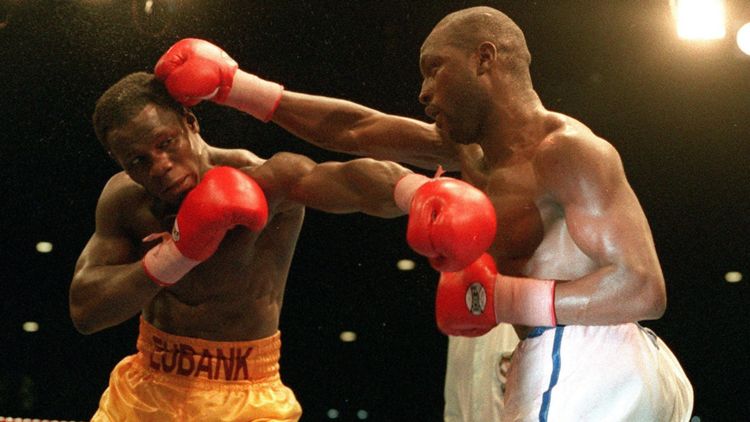
Chris Eubank
Chris Eubank is widely considered one of the greatest British boxers of all time and will be eternally remembered for his vicious rivalry with Nigel Benn in the 1990s.
But despite beginning his career in the United States, he, like the rest of the British greats, had to prove himself at York Hall before he was able to achieve greatness.
Eubank’s first five fights were all in New Jersey, but when he moved back to the UK, it was not long before he was pushed into the forge of East London.
In his 11th fight, Eubank stopped Simon Collins at York Hall in the fourth round and fought a week later at Royal Albert Hall before having back-to-back fights at York Hall – both points wins over Randy Smith and Franky Moro in 1989.
Five months later, he would reappear to knock out Jean-Noel Camara in the second round.
Eubank’s biggest night at York Hall was his last. He won his first international honours, knocking out Hugo Antonio Corti to become the WBC international middleweight champion in 1990.
This was only eight months before his generation-defining first fight with Nigel Benn, where he won the WBO middleweight title via ninth-round stoppage.
 Bob Thomas Sports Photography via Getty Images
David Haye
David Haye is one of Britain’s most explosive boxing talents of this millennium, bursting onto the scene in 2002 and going on to be one of three men in boxing history to win world titles in both the cruiserweight and heavyweight divisions – kept company by Evander Holyfield and Oleksandr Usyk.
Haye made his professional debut in devastating fashion at York Hall, knocking out Tony Booth in the second round and less than a year later would go one better in his fifth fight, and second at York Hall, by knocking out Gregg Scott-Briggs in the first round.
Following in the footsteps of the greats, Haye claimed his first professional honours at York Hall in 2003 by knocking out Tony Dowling in the first round for the English cruiserweight title.
Haye fought twice more at York Hall, defending his European cruiserweight title twice by knockout less than a year before he became the unified world champion against Jean-Marc Mormeck in 2007.
Two years later, Haye would beat Nikolai Valuev to become the WBA heavyweight champion.
 John Gichigi / Getty Images
Nigel Benn
Nigel Benn exists in the pantheon of British greats thanks to his ruthlessly aggressive, fan-friendly style, becoming a two-weight world champion, and his pair of blockbuster fights with Chris Eubank.
Benn was not a frequenter of York Hall, preferring to cut his teeth at Royal Albert Hall. But his relationship with the venue is different to those mentioned previously.
He first entered the famous venue in 1988 for his 13th fight, where he claimed his 13th consecutive knockout against Ferin Chirino, which helped propel him towards becoming the Commonwealth middleweight champion three months later.
But he would not return to York Hall until 1991 - after he lost to Chris Eubank, forfeiting his WBO middleweight title.
Benn was demoted from fighting in front of over 15,000 people at a sold-out National Exhibition Centre in Birmingham, to less than 2,000 at York Hall three months later.
While he did not graduate from York Hall as a prospect in the same way as other Brits, it played a career-saving role in getting him back to winning ways – helping him rebuild his confidence prior to winning the WBC super-middleweight champion in 1992.
 Getty Images
Watch Parker vs Wardley live on DAZN
Joseph Parker and Fabio Wardley fight on Saturday, October 25, to become the WBO mandatory challenger to Oleksandr Usyk. Watch the fight and undercard live and exclusive on DAZN PPV.


