Error code: %{errorCode}
Outsiders no more: How non-Europe heavyweights crashed the FIFA Club World Cup party
When Paris Saint Germain, Bayern Munich and Real Madrid stormed into the knockout rounds of the 2025 FIFA Club World Cup, no one was surprised.
Yet the story unfolding across this summer’s revamped 32 team tournament isn’t about European dominance – it’s about non-European clubs crashing the party.
From Saudi Arabia’s Al Hilal to Brazil’s powerhouse quartet and the newly elevated Inter Miami, many have delivered performances that amplify the Club World Cup’s global legitimacy and raise the bar for meaningful non-European participation.
In Group H, Al Hilal – a financial titan in Saudi football – grabbed a stunning 1-1 draw with Real Madrid on June 18, punctuating their insurgence upon the world stage.
That single point not only helped Al Hilal advance but sent a message - Saudi clubs, powered by investment and ambition, can hold their own against football’s traditional elite.
Brazil’s representation in the knockout phase is unprecedented. Four teams from the home of “Joga Bonito” and samba flair have seen off European opposition in the groups.
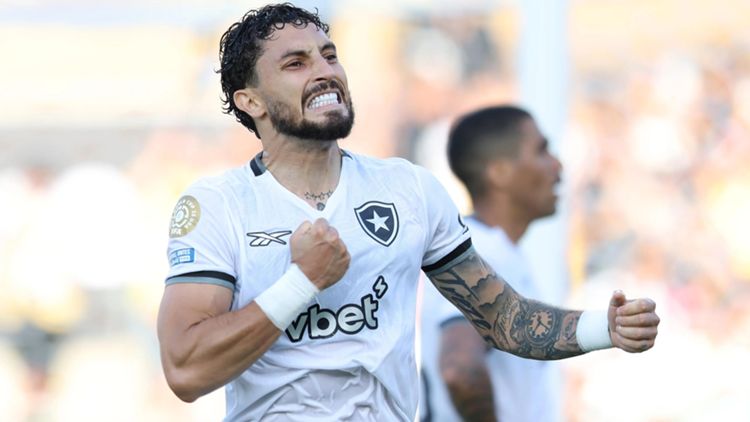
Botafogo stunned PSG 1-0 to finish second in Group B behind the French giants, a result to match any major upset seen in recent FIFA World Cup campaigns or the UEFA Champions League.
Flamengo blasted past Chelsea 3-1 in Group D, then drew with LAFC to claim their spot. Palmeiras secured their berth via a 2-0 win over Al Ahly and a 2-2 draw with Miami.
And Fluminense, the 2023 runners-up to Manchester City, matched German giants Borussia Dortmund in a tightly fought 0-0 draw en-route to the knockout rounds.
The group stage provided tangible evidence that Brazilian clubs aren’t just participants – they’re contenders.
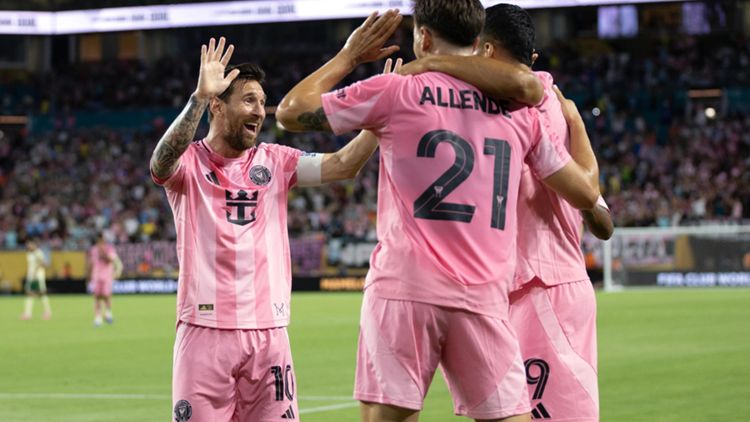
Thanks to Lionel Messi, Miami have dominated headlines in US soccer over the last two years – and not just for viewership.
So far at the Club World Cup, they’ve shown that the hype is justified, seeing off Portuguese giants Porto 2-1 in their second game, and coming second in Group A.
They now face a mouth-watering showdown with PSG, Messi’s former employers, in the last-16.
These results all matter in a wider context, too. The Club World Cup as a tournament has expanded, and now participation has been freshly further incentivised by the examples the non-European sides are setting.
Clubs from Asia, Conmebol and Concacaf can see the tangible benefit of making the tournament, and how a strong group-stage showing can elevate a club’s brand in new markets.
Investment in loading up on talent for the tournament is also paying off. Al-Hilal’s draw with Madrid vindicates Saudi football’s spending spree. Brazilian clubs, with deep squads and domestic investment, continue to translate strength into results.
And these results are forcing a reshaping of the long-established football hierarchy. PSG, Chelsea, Porto – once considered European safe bets – have been humbled.
The outcome? Non-European clubs have earned a seat at the table, not as guests but as equals.
For clubs outside Europe, the Club World Cup is evolving. There is, of course, the financial incentives on offer. Prize money and broadcast deals mean a strong showing at the tournament can have long-reaching and lucrative effects.
And a positive display on the global stage becomes marketable currency – whether in sponsorship, fanbase growth or merchandising.
More important in a purely sporting context, though, is the potential for validation in the eyes of the watching football world.
Beating or matching Europe’s best proves capability and delivers credibility – whether that’s to established behemoths of the game, such as Flamengo or Boca Juniors, who can no longer match financial might with the European elites, or upstart projects like Inter Miami.
Non-European clubs face hurdles – schedule congestion, travel tolls – and the European squads still hold edge in depth and star power. Yet these group-stage breakthroughs prove ambition can bridge gaps.
The key question for the future is whether the teams from outside football’s traditional power centre who’ve shone so brightly this summer will inspire others to match their efforts to not only qualify for future editions but to put forward a maximum effort when there.
If one obstacle has been the competitive advantage European sides hold, this tournament has shown it is perhaps not as intimidating of an advantage as previously thought.
There is now an imaginable future in which Al Hilal battle Barcelona, Palmeiras lock horns with Liverpool and Inter Miami host Real Madrid – and in every instance the underdog feels empowered to punch well above their weight.
The 2025 tournament has crystallized the potential for group-stage success to translate into global parity. Qualification for the Club World Cup now means more than just participation for clubs outside Europe – it’s a proving ground with tangible rewards: respect, revenue and reach.
The unforeseen element of intrigue the 2025 FIFA Club World Cup group stage has provided is in how it has sprung a global renaissance.
Non-European clubs have showcased their quality, won key matches and captured imaginations, from Al-Hilal’s impressive draw with the 15-time European champions to Botafogo’s triumph over the reigning Champions League winners, Flamengo’s dismantling of Chelsea and Inter Miami’s headline-grabbing feats.
The fascination of this year’s Club World Cup has not only come from the fact Europe’s biggest clubs are taking part and taking it seriously, but also because every corner of the globe now plays its part.
Watch all 63 matches of the 2025 Club World Cup live on DAZN. More information and to sign up for a free account here.

